The sun in South Africa doesn’t give you a lot of warning. One moment you’re enjoying a braai on the patio, and the next you’re lobster red and tender, and wondering when exactly that happened.
We’re good at applying sunscreen before a day at the beach. But most of us don’t think as carefully about the spaces where we spend time every day (we are looking at you, garden and patio) and whether the shade there is actually doing its job.
So what does UV protection actually mean when it comes to shade, and how much protection do you need against our lovely yet harsh sun?
This one catches a lot of people out. Temperature and UV levels are completely separate things. You can have a mild, overcast day in Johannesburg and still be exposed to high UV. It’s why people burn on cloudy days without realising it — the heat isn’t there to warn them.
This is mostly true, but not entirely. UV reflects off water, tiles, walls, and glass, which means it can reach you from angles your shade isn’t covering. Anyone who’s spent an afternoon under a patio that was right next to a pool and still ended up pink knows exactly what this means. Shade reduces your exposure significantly, but it doesn’t eliminate it entirely.
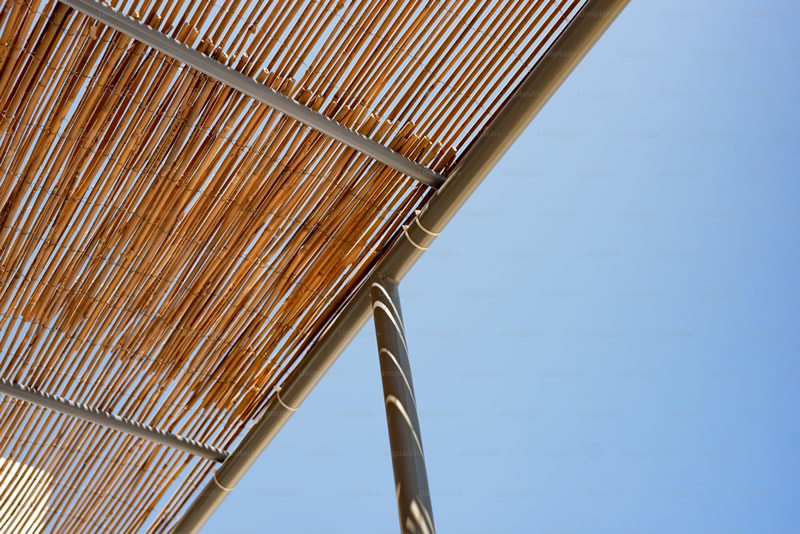
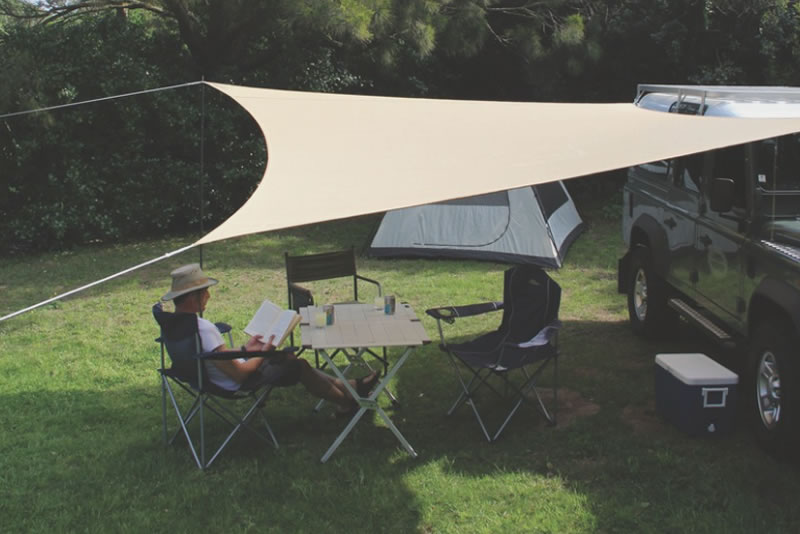
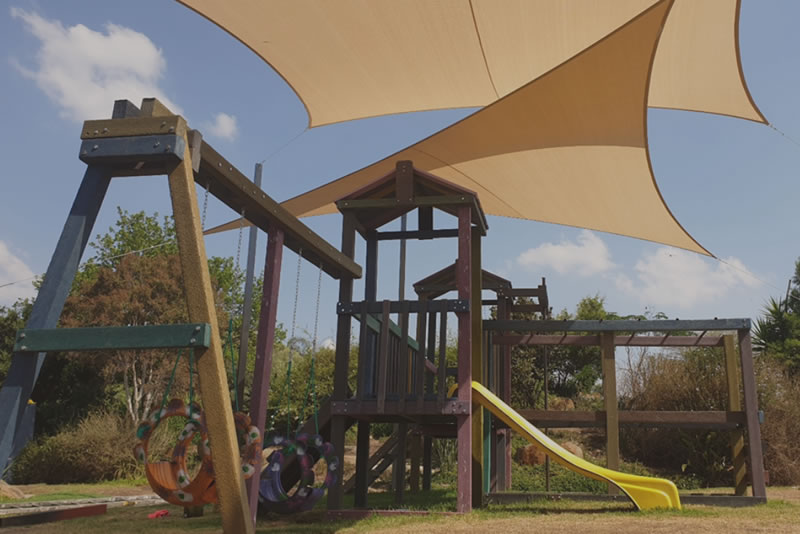
It really isn’t. A beach umbrella, a tarpaulin, and a quality shade sail perform very differently. Many standard beach umbrellas create shadow but don’t meaningfully filter UV. Tarpaulins can block UV well but trap heat and make the space unbearably hot and stuffy to sit under. Quality shade fabric — made with the right weave and the right material — does both: it reduces UV while still letting air move through, which is what makes a covered outdoor space actually usable.
Peak UV is between 10am and 2pm, but exposure builds up throughout the day. Early mornings and late afternoons are lower intensity, but if you’re outside for hours at a time, it adds up. The goal is to reduce the incidental exposure you get just by going about your day outdoors.
What UV Actually Does (Beyond Sunburn)
We tend to think of UV damage in terms of sunburn, but it goes further than that. UV breaks down materials over time. This is why outdoor fabrics fade, plastics become brittle, and furniture deteriorates.
South Africa’s UV index is consistently higher than most of Europe and North America. Factors like long sunshine hours, frequently clear skies, and higher elevation — Gauteng sits at around 1,700 metres above sea level — all increase how much UV reaches the ground. The Highveld is particularly intense in this regard.
This is the environment Kalahari Shade products are designed for.
What Level of UV Block Do You Actually Need?
If you want to block UV completely, you need a solid structure like a roof, a solid opaque cover, or something equivalent. That works, but it comes with trade-offs. You lose the open-air feel, airflow drops, and in the South African heat, that matters a lot.
For most outdoor living spaces, the practical answer is breathable shade fabric with a high UV block rating.
80% UV block is widely regarded as the threshold where shade starts doing meaningful work for everyday use. Below that, the protection is limited. Above it, you’re covering the majority of harmful UV while still allowing air to circulate.
Here’s how Kalahari Shade’s range breaks down:
All Kalahari Shade products are made from HDPE (high-density polyethylene) using a woven construction that sets them apart from cheaper alternatives. The weave is what makes them breathable: air passes through while UV is significantly reduced. It’s also what makes them tear and fray resistant, and genuinely easy to maintain: a simple spray-down is all it takes to clean them.
This isn’t a coincidence of design. Kalahari Shade is the original shade sail in South Africa, and that heritage shows in how the products are built — for local conditions, for long-term use, and for quality that holds up.
The Practical Difference Good Shade Makes
When shade is working properly, you notice it quickly. Surfaces that were previously too hot to touch become comfortable. Glare reduces. Spaces that were unusable between 11am and 3pm become usable again. Outdoor furniture lasts longer because it’s not taking the full brunt of the sun every day.
That’s the real measure of whether your shade is doing its job — not just whether it creates shade, but whether the space underneath it is actually comfortably cool and safe.
If you’re looking at shade solutions for your patio, garden, or car port, browse the Kalahari Shade range or get in touch if you have questions about what would work best for your setup.

Find installation guides or connect with our recomended installers for a secure, professional setup
You may be interested in the following articles in the same category
| Cookie | Duration | Description |
|---|---|---|
| cookielawinfo-checkbox-analytics | 11 months | This cookie is set by GDPR Cookie Consent plugin. The cookie is used to store the user consent for the cookies in the category "Analytics". |
| cookielawinfo-checkbox-functional | 11 months | The cookie is set by GDPR cookie consent to record the user consent for the cookies in the category "Functional". |
| cookielawinfo-checkbox-necessary | 11 months | This cookie is set by GDPR Cookie Consent plugin. The cookies is used to store the user consent for the cookies in the category "Necessary". |
| cookielawinfo-checkbox-others | 11 months | This cookie is set by GDPR Cookie Consent plugin. The cookie is used to store the user consent for the cookies in the category "Other. |
| cookielawinfo-checkbox-performance | 11 months | This cookie is set by GDPR Cookie Consent plugin. The cookie is used to store the user consent for the cookies in the category "Performance". |
| viewed_cookie_policy | 11 months | The cookie is set by the GDPR Cookie Consent plugin and is used to store whether or not user has consented to the use of cookies. It does not store any personal data. |