
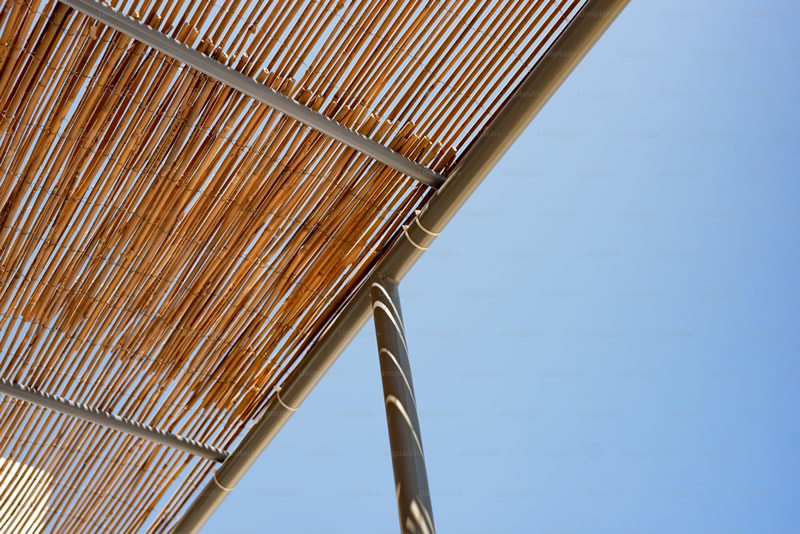
We’re lucky in South Africa. We get to enjoy pleasantly warm weather for most of the year. It’s one of the reasons stoep and patio living plays such a big role in how we spend our time.
But around midday, it can become nearly unbearable to sit outside.
The good news? It’s fixable. With the right setup, your outdoor space can stay cool and comfortable, even during the hottest part of the day.
First, it helps to understand what’s actually causing all that heat.
It’s not just the sun itself. It’s a combination of factors all working together:
Your paving, walls, and furniture sit in direct sun for hours, absorbing and storing heat.
Put it all together, and you’re left with a space that doesn’t just get hot, but stays hot.
Not all shade is created equal. Some options simply block sunlight, while others actually help reduce heat buildup.
Here’s how the most common solutions compare:
Pergolas are permanent, built-in structures, often made from steel or wood, that can turn a patio into a defined outdoor living space. Some feature slatted designs, others use adjustable louvres, while some incorporate solid roofing.6
Pros:
Cons:

In South Africa, gazebos are usually the pop-up type, more suited to camping, markets, or occasional use.
Cons:

Common in awnings and retractable systems, as well as standard umbrellas.
Pros:
Cons:

Flexible, tarp-style covers often used for temporary or budget-friendly shade setups.
Pros:
Cons:

Lightweight netting typically used in gardens, parking lots or agriculture to reduce sun intensity rather than create full shade.
Cons:

Designed specifically for outdoor living spaces where sun protection, comfort and appearance all matter.
Pros:
Cons:
Each of these types of shade has its place, but the right choice depends on how your space is used and how exposed it is.
For larger, fully exposed patios, a permanent solution is usually the best starting point.
These setups protect your space throughout the day, not just when you’re using it. That means less heat buildup, better protection for furniture, and a patio that’s actually usable during peak hours.
For smaller or partially exposed spaces, a movable option like an umbrella can work just as well. It gives you flexibility to adjust as the sun moves, without committing to a fixed structure.
The challenge is finding the right balance between sun protection, airflow, durability, ease of installation, and maintenance.
That’s exactly the gap we set out to solve with Kalahari Shade.
We were the original supplier of shade sails in South Africa, first introduced under the Coolaroo name in 2011. At the time, there was nothing like it locally.
The goal was simple: create a shade solution that could handle harsh sun, stand up to wind, and still be easy to install and maintain.
Woven shade sails offered that balance: UV protection without trapping heat, and durability without the bulk or cost of built structures.
From there, the range evolved to suit different types of spaces.
Kalahari umbrellas, for example, use the same HDPE woven fabric as our shade sails, making them more breathable and far easier to clean than traditional canvas umbrellas.
Today, that range covers a few different use cases. Choosing the right option depends on how your space is set up:
At the end of the day, it’s not about one “best” solution. It’s about choosing the right type of shade for your space, your climate, and how you actually use it.
| Cookie | Duration | Description |
|---|---|---|
| cookielawinfo-checkbox-analytics | 11 months | This cookie is set by GDPR Cookie Consent plugin. The cookie is used to store the user consent for the cookies in the category "Analytics". |
| cookielawinfo-checkbox-functional | 11 months | The cookie is set by GDPR cookie consent to record the user consent for the cookies in the category "Functional". |
| cookielawinfo-checkbox-necessary | 11 months | This cookie is set by GDPR Cookie Consent plugin. The cookies is used to store the user consent for the cookies in the category "Necessary". |
| cookielawinfo-checkbox-others | 11 months | This cookie is set by GDPR Cookie Consent plugin. The cookie is used to store the user consent for the cookies in the category "Other. |
| cookielawinfo-checkbox-performance | 11 months | This cookie is set by GDPR Cookie Consent plugin. The cookie is used to store the user consent for the cookies in the category "Performance". |
| viewed_cookie_policy | 11 months | The cookie is set by the GDPR Cookie Consent plugin and is used to store whether or not user has consented to the use of cookies. It does not store any personal data. |